Case In Point
Accelerating Dose Escalation in a Biomarker-Driven Solid Tumor Study
About Client
A biotechnology company developing a targeted therapy for patients with a specific KRAS gene mutation engaged Everest Clinical Research to support an early-phase dose-escalation study in solid tumors. The study is being conducted in the U.S., utilizes a BOIN design, and has multiple dose levels.
Challenge
The initial goal was to enroll 36–48 patients within 11 months. The study involves a molecularly defined patient population in a highly competitive clinical trial landscape, with multiple studies recruiting patients under similar eligibility criteria.
As with any dose-escalation study, enrollment pauses during each dose-limiting toxicity (DLT) period (in this case 28 days). Maintaining enrollment during these pauses has been particularly challenging because these patients have end-stage disease, and investigators prefer a short window between disease progression and the start of the next treatment. There is also a risk of losing patients to other studies being conducted at the same sites.
Timely data collection and entry are equally critical. Safety, laboratory, pharmacokinetic, and other key data need to be available promptly so the Safety Review Committee (SRC) can make informed decisions about the investigational product and the opening of subsequent dose levels and cohorts.
Solution
Through rapid site engagement and frequent communication, our operational teams have helped sites proactively identify potential patients. This approach has ensured that patients are consistently lined up and ready for treatment once the SRC approves the next dose level or cohort.
During each DLT period, the team works closely with the sites to ensure critical safety, laboratory, pharmacokinetic, and other required data are collected and entered promptly. This has enabled the SRC to make well-informed, timely decisions and minimized delays between cohorts.
Results
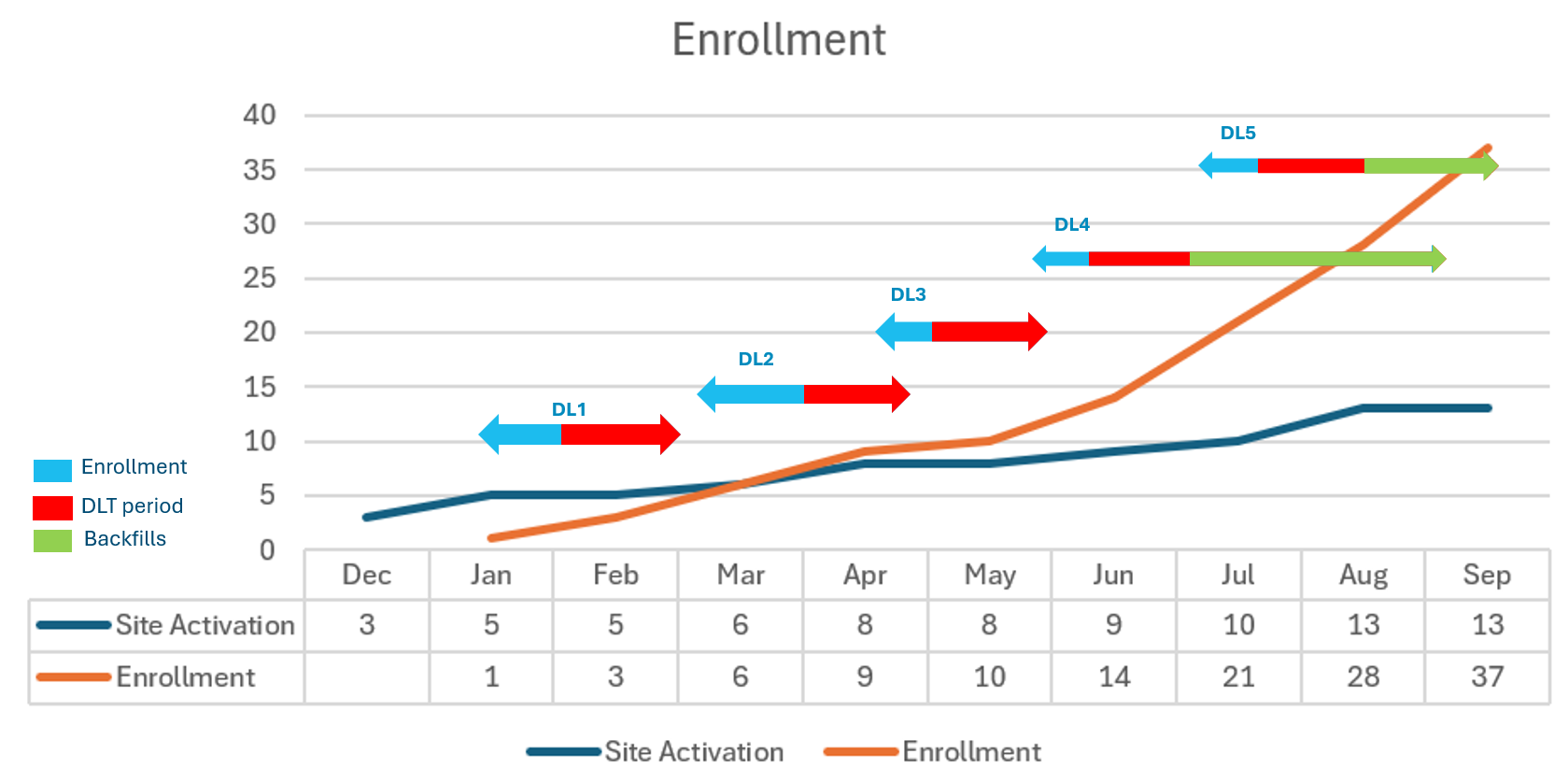
Despite the competitive enrollment environment and required DLT pauses, the study has enrolled 37 patients in just nine months, positioning the study ahead of its original 11-month enrollment timeline.
The study has progressed efficiently through five dose levels with minimal to no downtime between dose levels/cohorts.